

Ingredient Spotlight: Baking Soda & Baking Powder
What's the difference, when to use each one, and the history of how they came to be a common pantry baking staple.

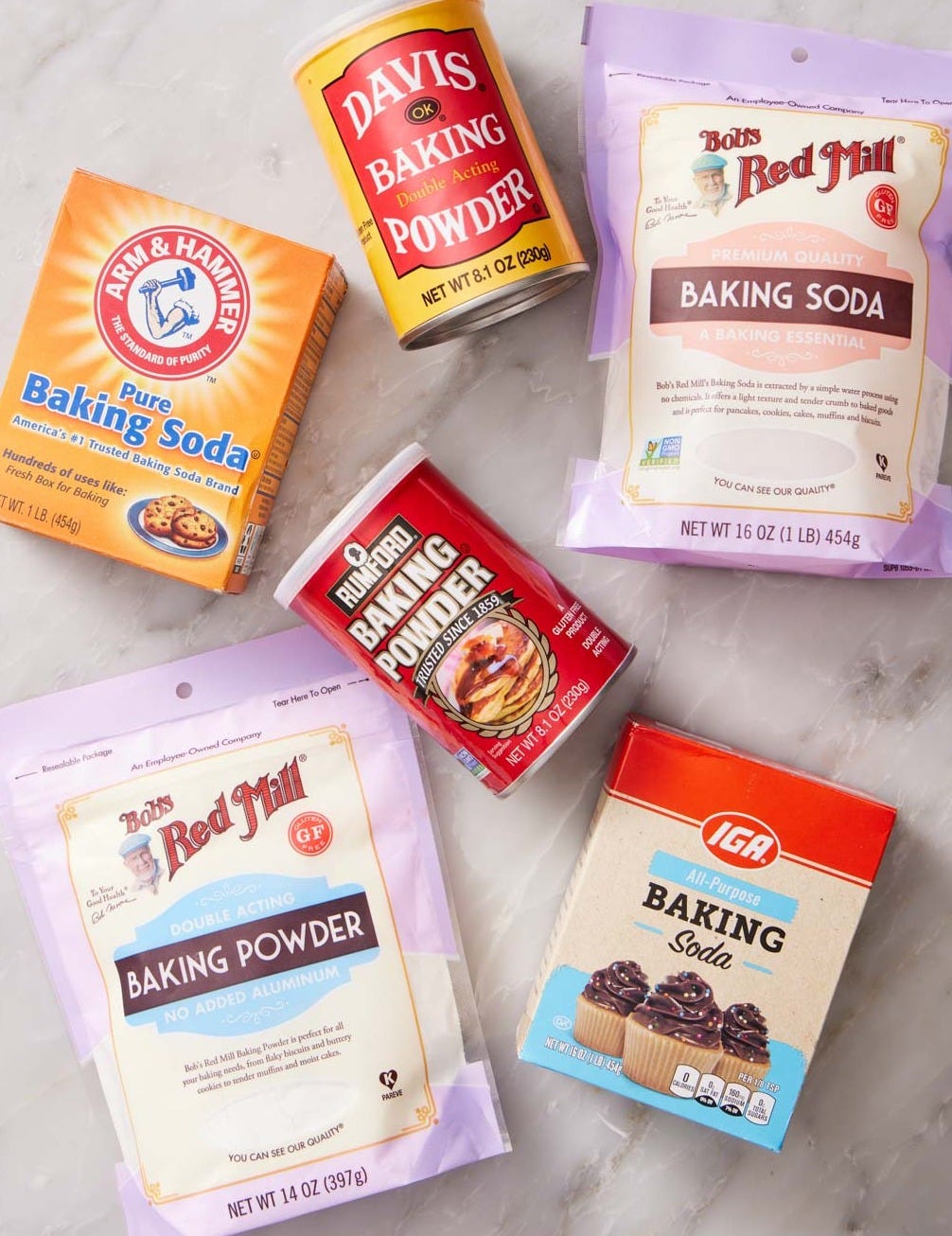
Over the years, many of you have asked me about baking soda and baking powder. What’s the difference between them? Can’t I just use one if I don’t have the other? Why do I have to use them at all? Today, I’m going to address this for you! These two ingredients are essential to a baker’s pantry and are used in so many different kinds of baked goods.
The role they play can vary depending on the recipe, but at their foundation, they are leaveners—or what makes batters and doughs rise. They produce the little gas bubbles of carbon dioxide that are responsible for a cake being, well, cake! Without a leavener, the cake would be dense, tough, gummy—not very cake-like. The leavener gives it that sponge-like texture and is why your batter increases in volume during baking.
Yeast, for example, is a natural leavener, made up of a microorganism that grows and feeds off of parts of the flour, producing gas bubbles (read all about that in my previous Ingredient Spotlight!).
Baking soda and baking powder are referred to as “chemical leaveners.” Don’t let that scare you—these products are perfectly safe to use in your baking! They get that name because they use a chemical reaction (through heat or acid) instead of a natural reaction (like growing yeast) to give lift to recipes. Without them, we wouldn’t be able to regularly enjoy quick breads, muffins, cakes, cookies, and so much more.
In today’s newsletter, I’m going to cover how each of these leaveners works, how they affect recipes, and if/how you can swap them out for each other. But first, let’s get a little history on how these became a part of our everyday baking.