

Ingredient Spotlight: Butter

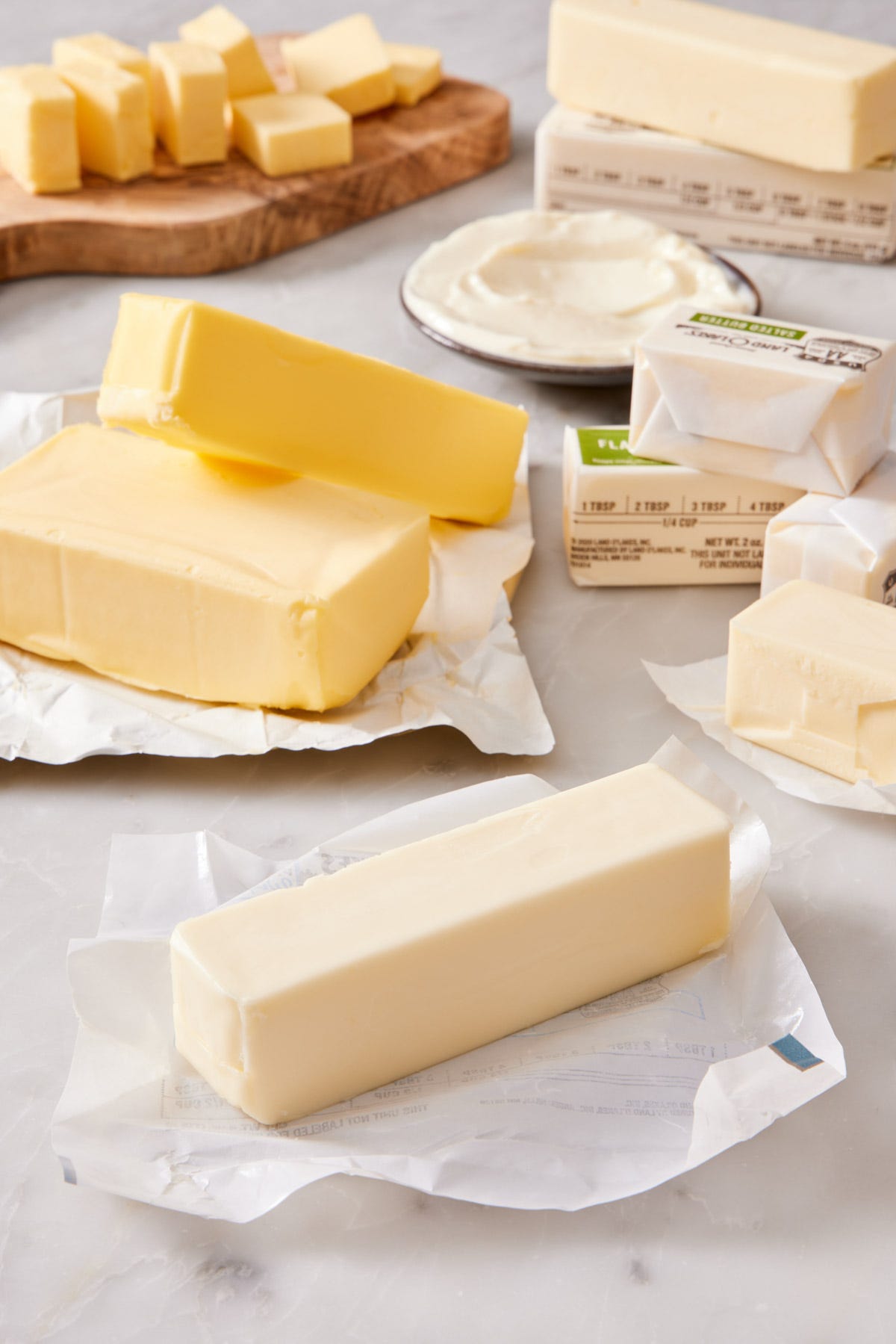
Butter— it’s the foundation of so many delicious baked goods. From crisp or chewy cookies to buttery pie crusts and pastries to fluffy cakes and tender breads, butter plays a big part in the success of so many different types of baking recipes. Today, I want to take a dive into these golden blocks and explore just how they affect the flavor and texture of what you're making.
Given this month is full of holidays that center around baking, I wanted to highlight this ingredient before I share a number of recipes. In the coming weeks, I’ll be highlighting butter in many forms— cakes, enriched breads, frostings, and so many cookies. Those recipes start this Saturday!
I’m going to start with a brief overview of the most common types of butter, and then we’re going to focus on one specific type for today’s spotlight: American-style butter. I’ll explain more about exactly what that means and why it matters as we continue.
But first, I’ll say that the world of butter as an ingredient is vast and can be explored in so many different ways. I want to narrow the focus for today’s discussion, but I plan on doing more spotlights on specifics like browned butter, European butter, etc., in the coming months, so stay tuned. Now, let’s get started!
A Quick Overview of Butter’s Composition
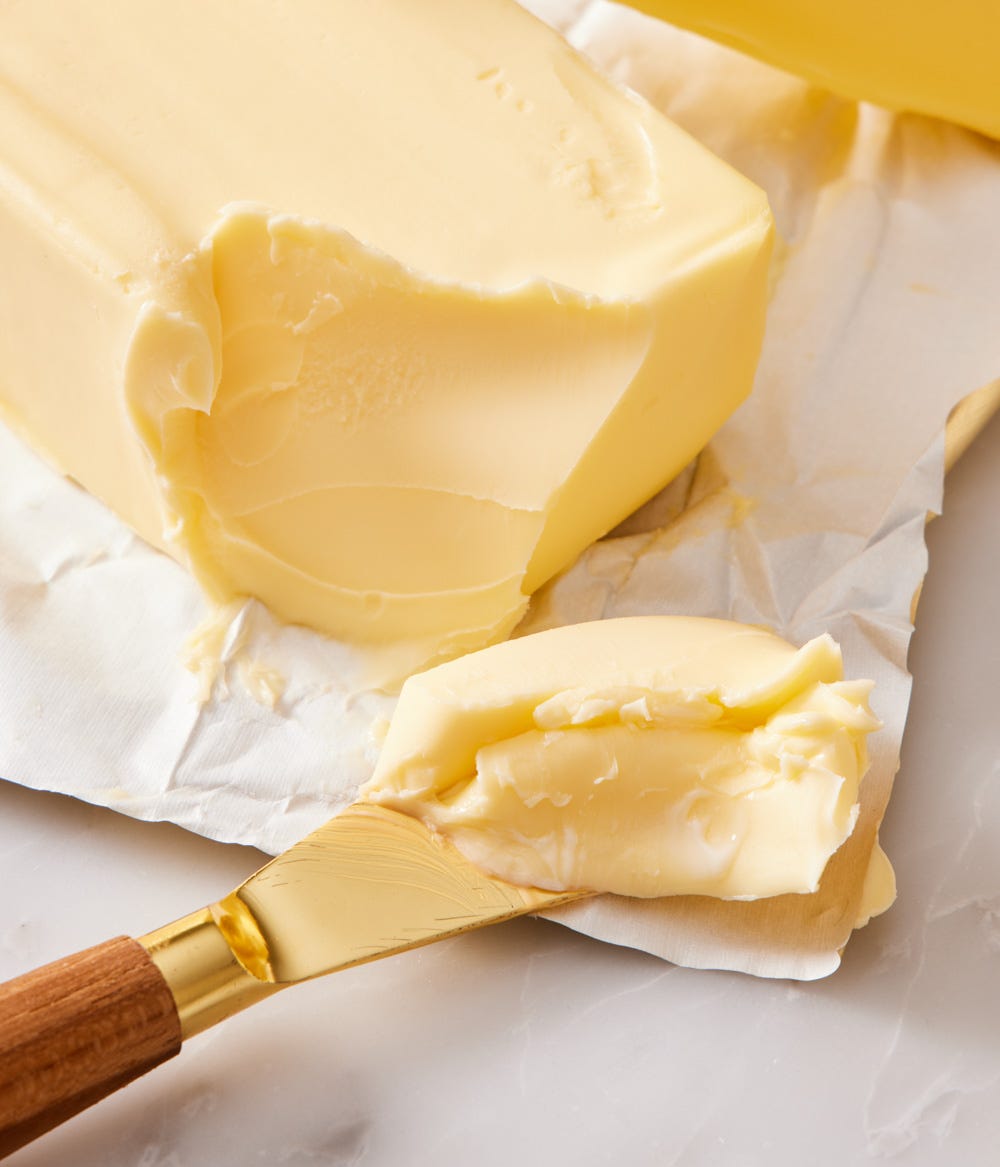
First up, let’s cover the basic makeup of butter. In its simplest definition, butter is the separated fat from dairy cream. The cream is churned to separate the fat molecules from the whey, which clump together and produce a solid fat that can be kneaded, pressed, and shaped. Despite how it might seem, butter isn’t 100% fat after processing— it still contains some water and milk solids. This is a key marker for determining different types of butter, as they vary by the amount of butterfat to other compounds.
Different Types Of Butter
Now that we know butter’s basic composition, let’s discuss the different types of butter so you know exactly what you are looking for when a recipe calls for it. These are the 6 main forms you can find in just about any conventional grocery store:
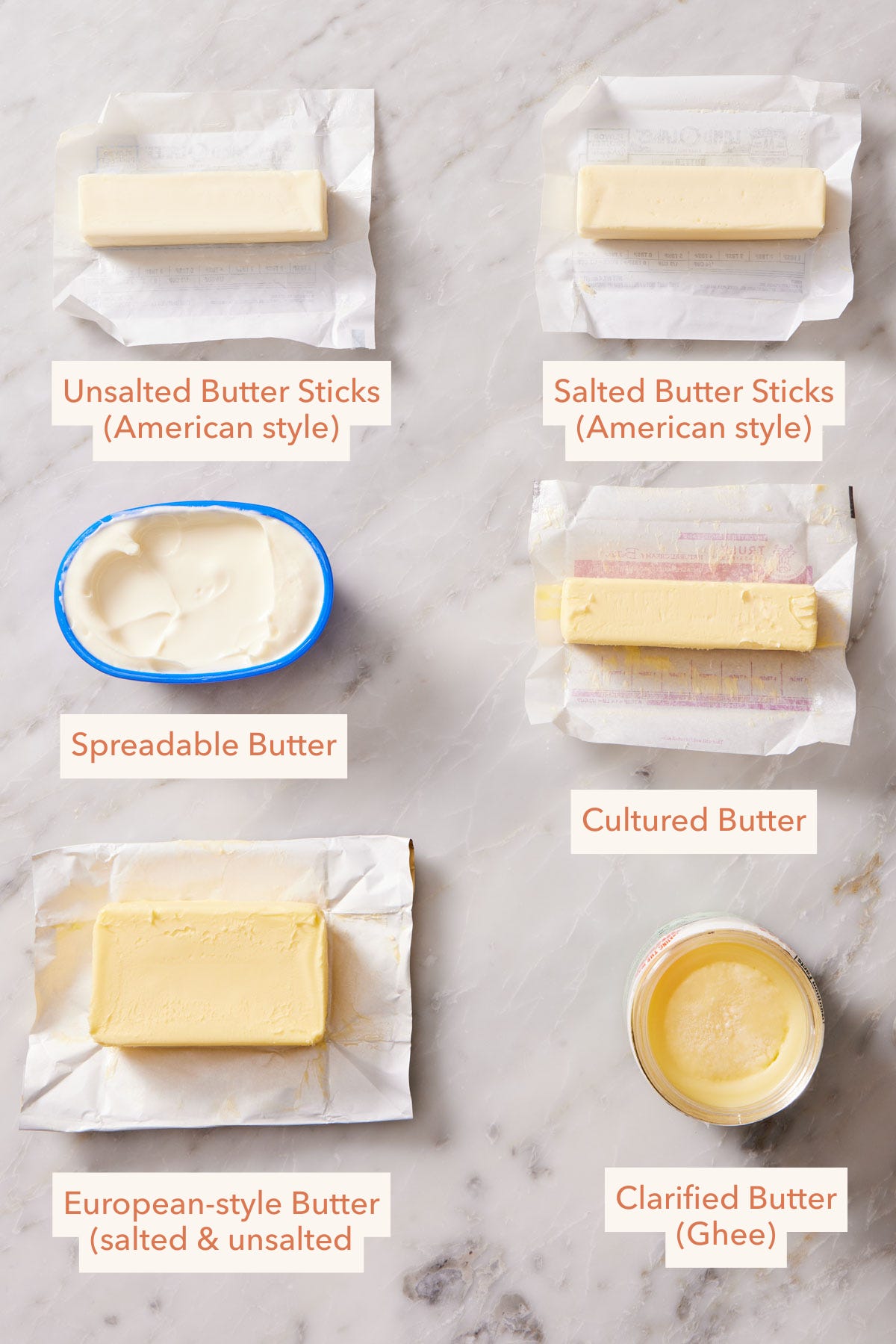
So what’s the actual difference between each one? The main differences to note are about the fat content for each and any processing method or added ingredients.