

Cranberry Crumb Cake
Tender, buttery cake with pops of fresh cranberries and crunchy almond streusel on top.

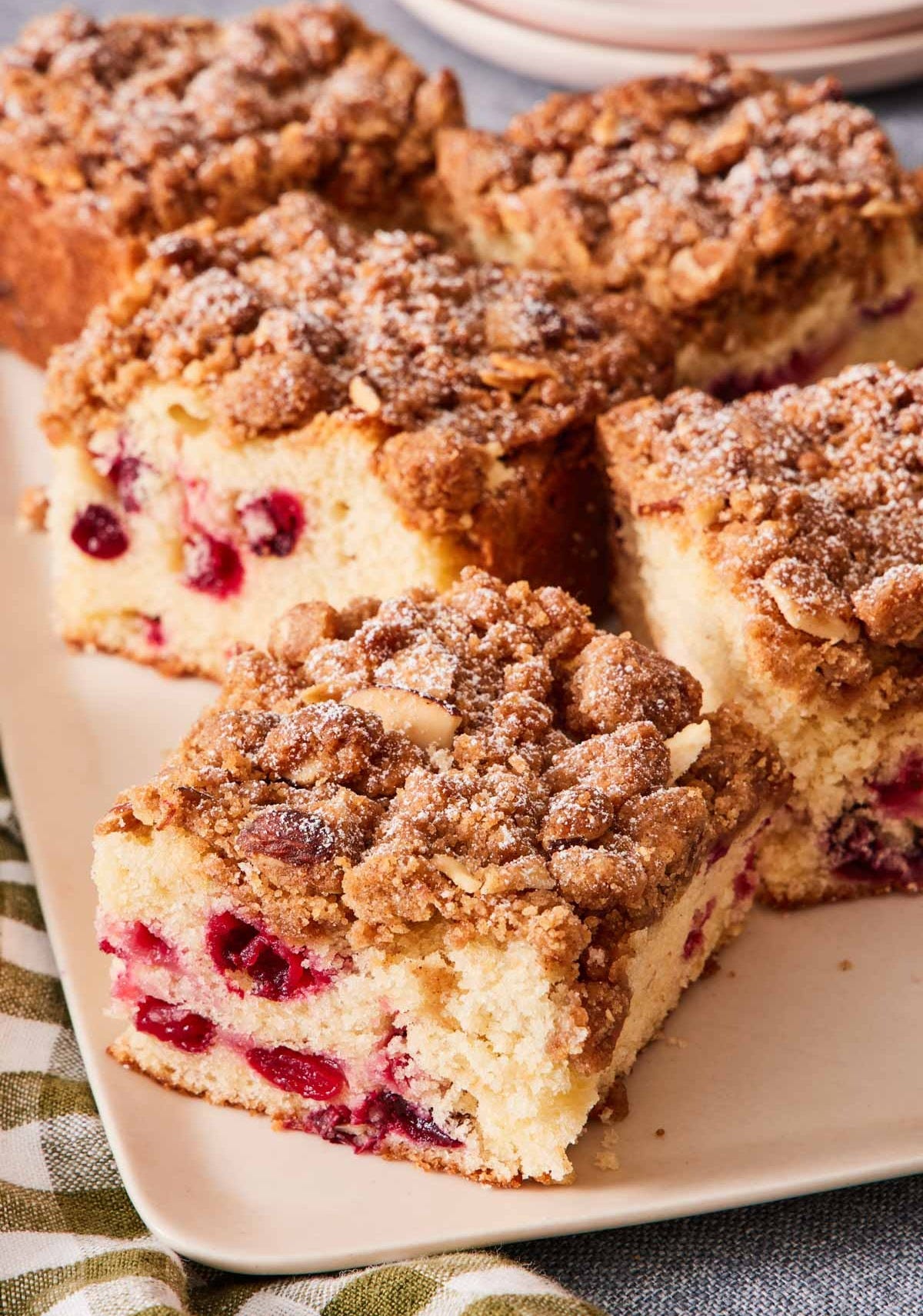
Coffee cake is one of my all-time favorite cake categories (even though there is no icing!). I love the pleasantly dense but extremely moist cake crumb that a good coffee cake has. The fact that it’s topped with a crunchy streusel just seals the deal. There are all sorts of varieties of coffee cakes, too. From ones with ribbons of cinnamon sugar inside to pumpkin (like I shared with you back in October), blueberry-studded, and rich chocolate— the list goes on. But for today, let’s concern ourselves with a more seasonal, cranberry variety.
I love using cranberries in baking. They’re so perfectly tart and packed with flavor. I find they really contrast well with the sweetness of any dessert. In this cake, we have beautiful notes of brown sugar and a lovely play of textures from the streusel filled with crunchy almonds and kissed with cinnamon, as well as that buttery, melt-in-your-mouth cake, and tart pops of fresh cranberries. The cake also has notes of both vanilla and almond, which pair beautifully with the cranberries
I think the cake is lovely as is, but if you wanted to, you could add an extra kiss of sweetness with a glaze on top, which could be anything from a brown butter and cinnamon version to a simple vanilla or even almond-flavored glaze. (There’s a quick recipe for you in the notes!)
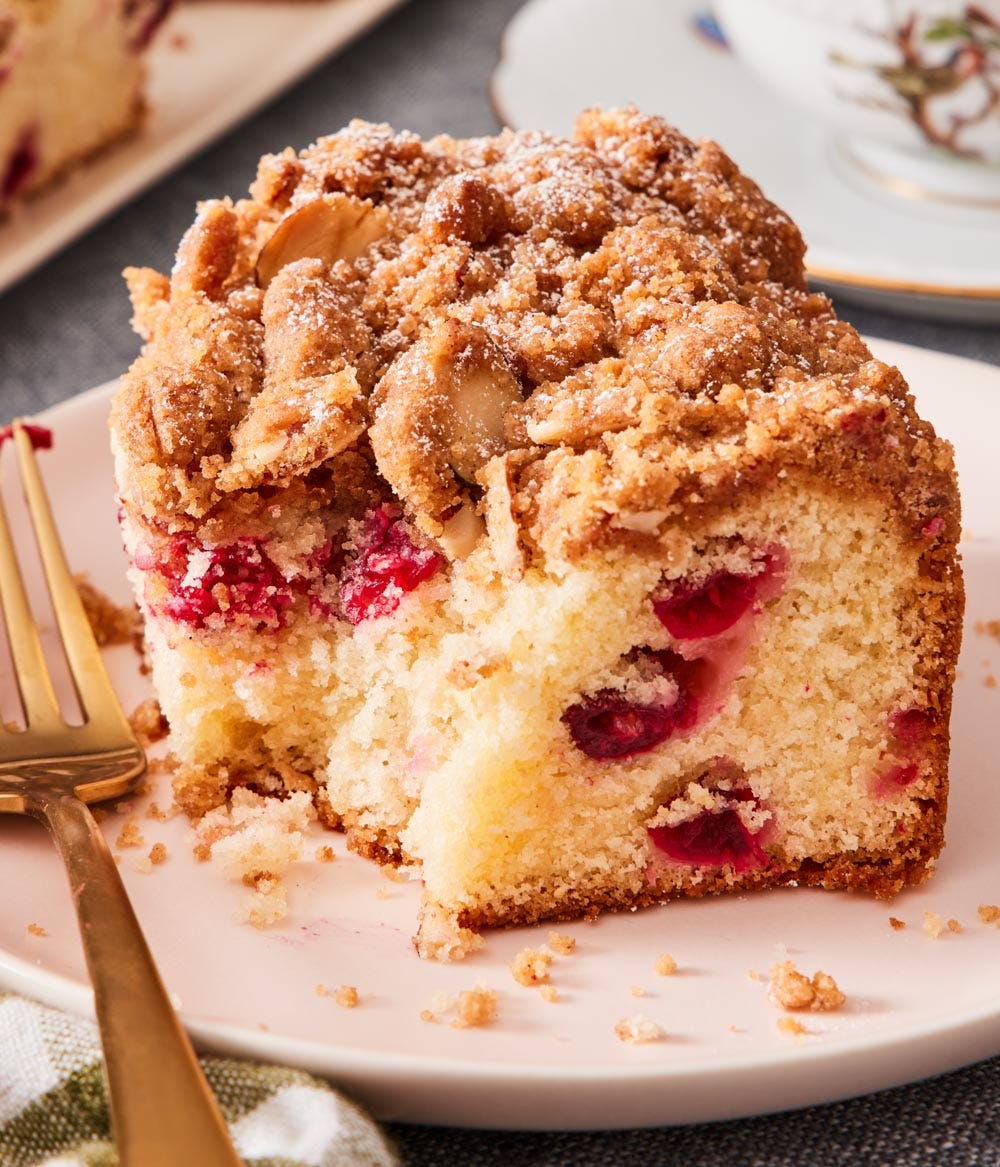
This recipe is quite easy— just a classic creaming method for making the batter, then stir in the cranberries and sprinkle with the simple streusel. Since you are using an electric mixer to make the batter, just remember not to overmix it once the flour is added. Overmixing your flour will give you a denser, more gummy cake as opposed to that beautiful, tender, buttery crumb coffee cake should have.
You will be adding the flour mixture in three parts, alternating it with milk. This process helps incorporate the wet and dry ingredients more evenly to avoid lumps, which also helps prevent over-mixing. Stop and scrape down the bowl a few times during mixing, and stop mixing when all of the dry streaks of flour disappear.